Surgical incision
- HAE
- No
- Traditional Hemorrhoid Surgery
- Yes
Condition
A minimally invasive, non-surgical treatment for bleeding internal hemorrhoids.
Overview
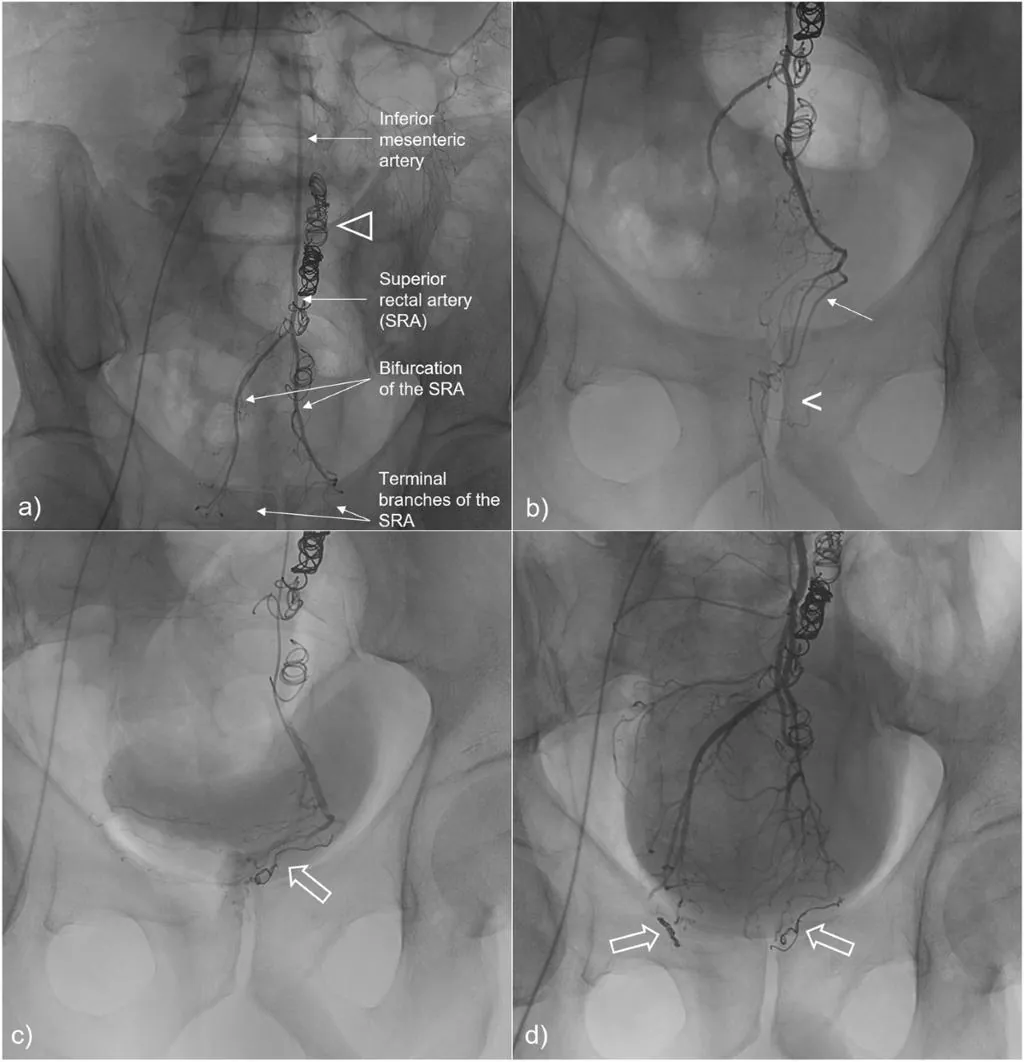
Through a tiny skin puncture in the wrist or groin, a small catheter is guided to the arteries supplying the hemorrhoids. Using specialized imaging, these vessels are blocked with tiny particles (embolics) and/or metal coils to reduce blood flow to the bleeding or symptomatic internal hemorrhoids. This decreases swelling and bleeding without surgery or tissue removal.

Symptoms
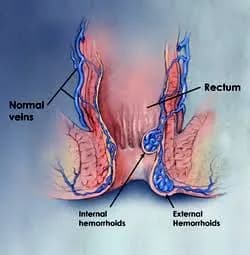
Internal vs. External Hemorrhoids
Internal hemorrhoids develop inside the rectum, most often cause painless bright-red bleeding with bowel movements, and may cause pressure or fullness but usually no visible external lump. These are the primary candidates for our office for Hemorrhoid Embolization (HAE/"Emborrhoid").
External hemorrhoids form under the skin around the anus, causing swelling, itching, and pain (especially if clotted/thrombosed). These are typically treated with creams, lifestyle measures, or office procedures — not embolization. If your main symptom is bleeding from internal hemorrhoids, you may be a candidate for HAE.
Hemorrhoid Grades
Who Is a Candidate?
You may be a good candidate if you have:
Who Is Not a Candidate?
Benefits of HAE at Buffalo Vascular Care
Comparison
| HAE | Traditional Hemorrhoid Surgery | |
|---|---|---|
| Surgical incision | No | Yes |
| Hemorrhoids surgically removed | No | May be |
| Treatment approach | Artery embolization | Surgical |
| Performed by | Interventional Radiologist | Surgeon |
| Setting | Outpatient | Varies |
| Recovery | Generally shorter | Typically longer |
| Appropriate for everyone | No | No |
Common Questions
Hemorrhoid Artery Embolization (HAE) is a minimally invasive, image-guided treatment for symptomatic internal hemorrhoids, particularly hemorrhoids that cause persistent or recurrent bleeding. During the procedure, a small catheter is guided into the arteries supplying the hemorrhoids. These arteries are then embolized to reduce blood flow to the hemorrhoidal tissue, helping improve bleeding and other related symptoms. HAE does not require surgical removal of the hemorrhoids.
HAE is performed by an interventional radiologist, a physician specially trained to perform minimally invasive treatments using advanced imaging and catheter-based techniques.
Yes. Interventional radiologists can treat certain types of hemorrhoids without traditional hemorrhoid surgery. Using a procedure called hemorrhoid artery embolization, the physician treats the arteries supplying the hemorrhoids from inside the blood vessels. An evaluation is necessary to determine whether HAE is appropriate for your particular symptoms and type of hemorrhoids.
Yes. Not all hemorrhoids require surgery. Conservative treatments such as increased dietary fiber, hydration, stool softeners, topical medications, and changes in bowel habits may improve symptoms. Office-based procedures such as rubber-band ligation may also be appropriate. For selected patients with symptomatic internal hemorrhoids, hemorrhoid artery embolization offers a minimally invasive treatment option without surgically cutting or removing the hemorrhoids.
Depending on the type and severity of hemorrhoids, alternatives may include dietary and lifestyle changes, medications, rubber-band ligation, sclerotherapy, infrared coagulation, and hemorrhoid artery embolization (HAE). The most appropriate treatment depends on your symptoms, hemorrhoid grade, previous treatments, and overall health.
Most patients feel little to no pain. We use local anesthesia and sedation to keep you comfortable.
HAE is generally associated with less post-procedure pain than traditional surgical hemorrhoid removal because the hemorrhoidal tissue is not surgically cut or removed. Patients may experience temporary discomfort or other mild symptoms following treatment. Your physician will discuss what to expect and how to manage any symptoms.
Usually 1–2 hours. You go home the same day.
Many patients notice reduced bleeding within days to weeks, with continued improvement over time.
Relief is long-lasting for many, though results vary. If bleeding returns due to collateral arteries, a targeted re-embolization may help.
Yes. Even after HAE, it's important to:

Request a consultation to discuss your symptoms and treatment options.
Most insurance accepted