Ankle-Brachial Index (ABI)
- Purpose
- Compares blood pressure in your ankle and arm to identify reduced blood flow.
Condition
Expert Peripheral Artery Disease Care in Buffalo, NY
Overview
Restore Blood Flow. Relieve Leg Pain. Protect Your Limbs.
If you experience calf pain while walking, slow-healing wounds, numbness, or foot pain when lying down you may have Peripheral Artery Disease (PAD), a common circulatory condition caused by narrowed or blocked arteries that reduce blood flow to your legs and feet.
At Buffalo Vascular Care, our team specializes in diagnosing and treating PAD using advanced, minimally invasive techniques designed to restore circulation, relieve symptoms, heal wounds, preserve limbs, and improve your quality of life.
Led by Dr. Azher Iqbal, who has more than 25 years of Interventional Radiology experience, our team works closely with your primary care physician, cardiologist, podiatrist, and other healthcare providers to ensure you receive comprehensive, coordinated vascular care.

By the numbers
Dr. Azher Iqbal
Symptoms
Peripheral Artery Disease often develops gradually. Many people dismiss the early symptoms as getting older or being out of shape. Early diagnosis can help prevent serious complications.
Overview
Peripheral Artery Disease (PAD) is most commonly caused by atherosclerosis, a condition in which cholesterol, fat, calcium, and other substances build up inside the arteries (plaque formation). Over time, this plaque narrows or blocks the arteries, reducing blood flow to the legs and feet.
When muscles and tissues do not receive enough oxygen-rich blood, symptoms such as leg pain, cramping, slow-healing wounds, and pain at rest may develop. If left untreated, PAD can progress and lead to tissue loss, infection, or limb amputation.
PAD is more than a leg problem. It is also a marker of widespread vascular disease and is associated with an increased risk of heart attack and stroke. Early diagnosis and treatment can improve symptoms, restore circulation, and reduce the risk of serious complications.
Did You Know?
Risk factors
You may be at increased risk if you have any of the following:
Why Early Treatment Matters
Early diagnosis and treatment can help slow disease progression, improve circulation, relieve symptoms, and reduce the risk of serious complications.
When Should You See a Vascular Specialist?
Schedule an evaluation if you experience leg pain while walking, pain in your feet at rest, cold feet, slow-healing wounds, discoloration of the toes, or if you have diabetes and are concerned about your circulation. Early evaluation allows treatment before permanent damage occurs.
Why BVC
Buffalo Vascular Care provides comprehensive evaluation and minimally invasive treatment for Peripheral Artery Disease using advanced, minimally invasive techniques. Our goal is to diagnose PAD early, restore circulation, relieve symptoms, preserve limbs, and reduce your risk of future cardiovascular complications. We work with and make recommendations to your primary care physician for medical PAD recommendations.
Diagnosis
Early diagnosis is essential to prevent disease progression and preserve limb health. Your evaluation begins with a detailed medical history, physical examination, and non-invasive vascular testing to determine the location and severity of arterial disease.
Accreditation
Our Intersocietal Accreditation Commission (IAC) accredited vascular laboratory provides high-quality, non-invasive vascular testing such as Ankle-Brachial Index (ABI), Toe-Brachial Index (TBI) and Arterial Duplex Ultrasound performed by experienced vascular technologists. Accreditation demonstrates our commitment to accuracy, quality, and patient safety.
Diagnostic testing
| Test | Purpose |
|---|---|
| Ankle-Brachial Index (ABI) | Compares blood pressure in your ankle and arm to identify reduced blood flow. |
| Toe-Brachial Index (TBI) | Measures circulation to the toes, especially useful in patients with diabetes or calcified arteries. |
| Arterial Duplex Ultrasound | Uses sound waves to evaluate blood flow and locate narrowed or blocked arteries. |
| Diagnostic Angiography | A minimally invasive procedure that provides real-time images of the arteries and may allow treatment during the same session. |
What's Next?
If testing identifies significant arterial narrowing or blockage, your physician will discuss the most appropriate treatment options, which may include lifestyle modification, medications, minimally invasive endovascular procedures, or surgery depending on the severity of disease.
Treatment
Treatment for Peripheral Artery Disease (PAD) is individualized based on the severity of disease, your symptoms, overall health, and treatment goals. Our primary objectives are to improve blood flow, relieve symptoms, promote wound healing, preserve limbs, and reduce the risk of heart attack and stroke.
Lifestyle Modification
Healthy lifestyle changes are the foundation of PAD treatment and can help slow disease progression.
Medical Management
Many patients benefit from medications that reduce cardiovascular risk and improve circulation. Your physician may prescribe cholesterol-lowering medications, antiplatelet therapy, blood thinners when appropriate, and medications to optimize blood pressure and diabetes control.
Angiography
An angiogram is a minimally invasive imaging procedure that allows your physician to see the inside of your arteries in real time. It is considered the gold standard for diagnosing peripheral artery disease and determining the location and severity of arterial blockages.
During the procedure, a small catheter is inserted through a tiny puncture in the wrist or groin. Contrast dye is injected while live X-ray images are obtained, allowing your physician to evaluate blood flow and identify narrowed or blocked arteries.
Video
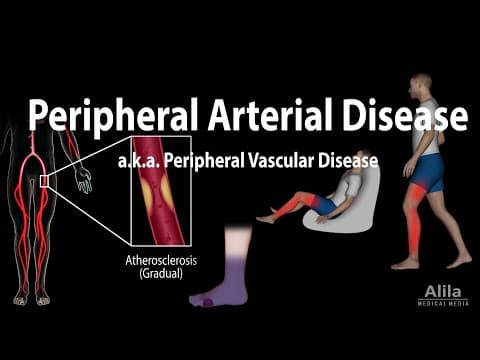
Why Might I Need an Angiogram?
An angiogram is considered the gold standard for evaluating Peripheral Artery Disease (PAD) because it provides the most detailed and accurate view of the arteries in your legs.
While non-invasive tests such as the Ankle-Brachial Index (ABI), Toe-Brachial Index (TBI), arterial ultrasound, CT angiography (CTA), and MR angiography (MRA) are excellent screening and diagnostic tools, an angiogram allows your physician to see the exact location, severity, and length of an arterial blockage in real time.
During the procedure, a tiny catheter is inserted through a small puncture in the wrist or groin. Contrast dye is injected into the arteries while live X-ray images are obtained, creating a detailed roadmap of your circulation.
An angiogram helps your physician:
One of the greatest advantages of angiography is that diagnosis and treatment can often be performed during the same procedure. If a blockage is identified and appropriate for endovascular treatment, your physician may be able to perform balloon angioplasty, atherectomy, and/or stent placement immediately, restoring blood flow without the need for open surgery.
| Procedure | How It Helps |
|---|---|
| Balloon Angioplasty | A small balloon is inflated inside the narrowed artery to improve blood flow. |
| Atherectomy | Specialized devices treat plaque and calcium from the artery to restore circulation. |
| Stent Placement | A small metal mesh tube is placed to keep the artery open when additional support is needed. |
When Is Surgery Needed?
Although many patients can be treated with minimally invasive procedures, some individuals with advanced disease or complex blockages may require surgical bypass. If surgery is the best option, we will coordinate your care with a vascular surgeon.
Our Approach
At Buffalo Vascular Care, we begin with the least invasive treatment appropriate for your condition. We work closely with your primary care physician and other specialists to develop a personalized plan focused on restoring circulation, relieving symptoms, and preserving your quality of life.
Step by step
Preparation
Recovery
Benefits and Risks
Angiography provides detailed information about your circulation, allowing your physician to accurately diagnose arterial disease and plan the most effective treatment.
Although angiography is very safe, all procedures carry some risk. Potential risks include bruising, bleeding, contrast reactions, infection, or damage to the artery. Your physician will review these risks and answer all of your questions before your procedure.
What Is an Interventional Radiologist?
Interventional Radiologists are physicians specially trained in performing minimally invasive procedures using advanced imaging guidance. They use catheters, guidewires, balloons, stents, and other specialized devices to diagnose and treat vascular disease without the need for major surgery.
Dr. Azher Iqbal is a board-certified Interventional Radiologist with more than 25 years of experience treating peripheral artery disease using advanced, image-guided techniques.
From the Medical Director
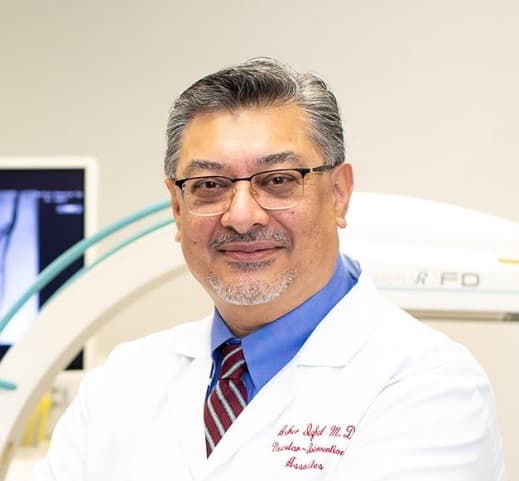
“Peripheral Artery Disease can have a significant impact on your mobility and quality of life, but early diagnosis and treatment can make a tremendous difference. Our goal is not only to restore blood flow but also optimize your vascular health. We work closely with your primary care physician and other specialists to develop a personalized treatment plan using the most advanced, minimally invasive techniques available. Every patient deserves compassionate care, clear communication, and access to the full range of treatment options.”
Our Collaborative Approach
At Buffalo Vascular Care, we believe the best outcomes come from a team approach. We coordinate your care with your primary care physician, cardiologist, endocrinologist, podiatrist, wound care specialist, nephrologist, vascular surgeon, and other healthcare providers as needed.
Why patients choose BVC
| What We Offer | Your Benefit |
|---|---|
| Experienced Interventional Radiology team | Advanced minimally invasive treatment options |
| IAC-accredited vascular laboratory | High-quality vascular testing |
| Office-based procedures | Convenient outpatient care |
| Personalized treatment plans | Care tailored to your individual needs |
| Comprehensive follow-up | Ongoing support after treatment |
Common Questions
Peripheral Artery Disease (PAD) is a condition in which cholesterol and plaque build up inside the arteries, reducing blood flow to the legs and feet. Left untreated, PAD can lead to chronic leg pain, non-healing wounds, infection, gangrene, and even limb amputation. It also increases your risk of heart attack and stroke.
The most common symptom of PAD is claudication—cramping, aching, or fatigue in the legs that occurs while walking and improves with rest.
Other symptoms may include:
PAD is most commonly caused by atherosclerosis, or hardening of the arteries. Risk factors include:
Managing these risk factors can help slow the progression of PAD.
Our physicians perform a comprehensive vascular evaluation that may include:
Our IAC-accredited vascular laboratory allows many patients to complete some of their testing in our office.
Yes. An angiogram is considered the gold standard for diagnosing Peripheral Artery Disease because it provides the most accurate and detailed visualization of the arteries. It allows your physician to identify exactly where blockages are located, how severe they are, and whether they can be treated during the same procedure.
Although many patients begin with non-invasive tests such as ABI, TBI, or arterial ultrasound, an angiogram is often recommended when intervention is being considered or when additional information is needed to guide treatment.
Treatment depends on the severity of your disease and may include lifestyle modifications, medication, or minimally invasive procedures.
Endovascular treatment options include:
Many of these procedures are performed through a tiny puncture, require no large incision, and allow patients to return home the same day. Open bypass surgery is reserved for selected patients with more advanced disease.
Yes. Lifestyle changes are one of the most important parts of treating PAD and preventing disease progression.
Your physician may recommend:
An angiogram is a minimally invasive imaging procedure that allows your physician to see the arteries in real time and identify areas of narrowing or blockage.
A tiny catheter is inserted through a small puncture in the wrist or groin, and contrast dye is injected while X-ray images are obtained. If appropriate, treatment can often be performed during the same procedure.
Most angiograms take 60–90 minutes, and patients receive local anesthesia with medication to help them relax.
Before your procedure, you may be asked to:
After your angiogram, most patients:
Angiography is considered a very safe procedure, and your physician will review any potential risks with you before treatment.
Most patients are discharged 1–4 hours after their procedure. Recovery time may vary depending on the complexity of the procedure and whether an intervention such as angioplasty, atherectomy, or stent placement was performed. Before you leave, our team will monitor your recovery, review your medications and activity restrictions, and provide detailed post-procedure instructions. Because sedation is used, you will need a responsible adult to drive you home.
Yes. PAD angiograms and minimally invasive endovascular procedures have an excellent safety record and are routinely performed by experienced Interventional Radiologists.
Major complications occur in less than 1% of patients, making these procedures significantly less invasive than traditional open vascular surgery. Most patients are treated through a tiny puncture in the wrist or groin, without the need for large incisions, and return home the same day.
A previous contrast allergy does not necessarily prevent you from having an angiogram. Many patients can safely undergo the procedure after taking medications beforehand to reduce the risk of a reaction. Be sure to tell your physician about any previous reactions to contrast dye so we can develop the safest treatment plan for you. Shellfish allergies alone are not considered a contraindication to receiving iodinated contrast.
No. PAD affects the arteries. Varicose veins may be a sign of underlying vein disease. Although they are different conditions, many patients have both. Treating both arterial and venous disease can improve circulation, relieve symptoms, and promote wound healing.
Yes. Most diagnostic testing, angiography, and medically necessary PAD treatments are covered by Medicare and most commercial insurance plans. Our office will verify your insurance benefits and obtain any necessary prior authorizations before your procedure.
You should schedule an evaluation if you experience:
Early diagnosis and treatment can improve your circulation, reduce your symptoms, and help prevent serious complications, including limb loss.

Scheduling an appointment is easy. Contact Buffalo Vascular Care by phone or request an appointment online. Our IAC-accredited vascular laboratory allows many patients to complete their diagnostic testing and consultation during the same visit, making evaluation and treatment planning as convenient as possible.
Most insurance accepted