Treatment Type
- Uterine Artery Embolization (UAE)
- Minimally invasive, image-guided procedure
- Myomectomy
- Surgical removal of fibroids
- Hysterectomy
- Surgical removal of the uterus
Overview
If you're living with heavy menstrual bleeding, painful periods, pelvic pressure, uterine fibroids, or adenomyosis, you may have less invasive treatment options than surgery alone. Buffalo Vascular Care offers Uterine Artery Embolization (UAE), a minimally invasive, FDA-approved outpatient procedure that treats fibroids and adenomyosis without removing the uterus. We work closely with your gynecologist before, during, and after treatment to provide coordinated care and the best possible outcomes.

By the numbers
Significant symptom relief
Symptoms
What Are Uterine Fibroids?
Fibroids are non-cancerous growths that develop in the muscular wall of the uterus. Fibroids are common and can vary greatly in size from very small growths to large masses that can enlarge the uterus significantly and can cause heavy bleeding, pelvic pain, pressure, urinary symptoms, constipation, back pain, and anemia.
What Is Adenomyosis?
Adenomyosis occurs when the tissue lining the uterus grows into the muscular wall of the uterus, often causing heavy bleeding, severe cramping, pelvic pain, and an enlarged uterus.
What Is Uterine Artery Embolization (UAE)?
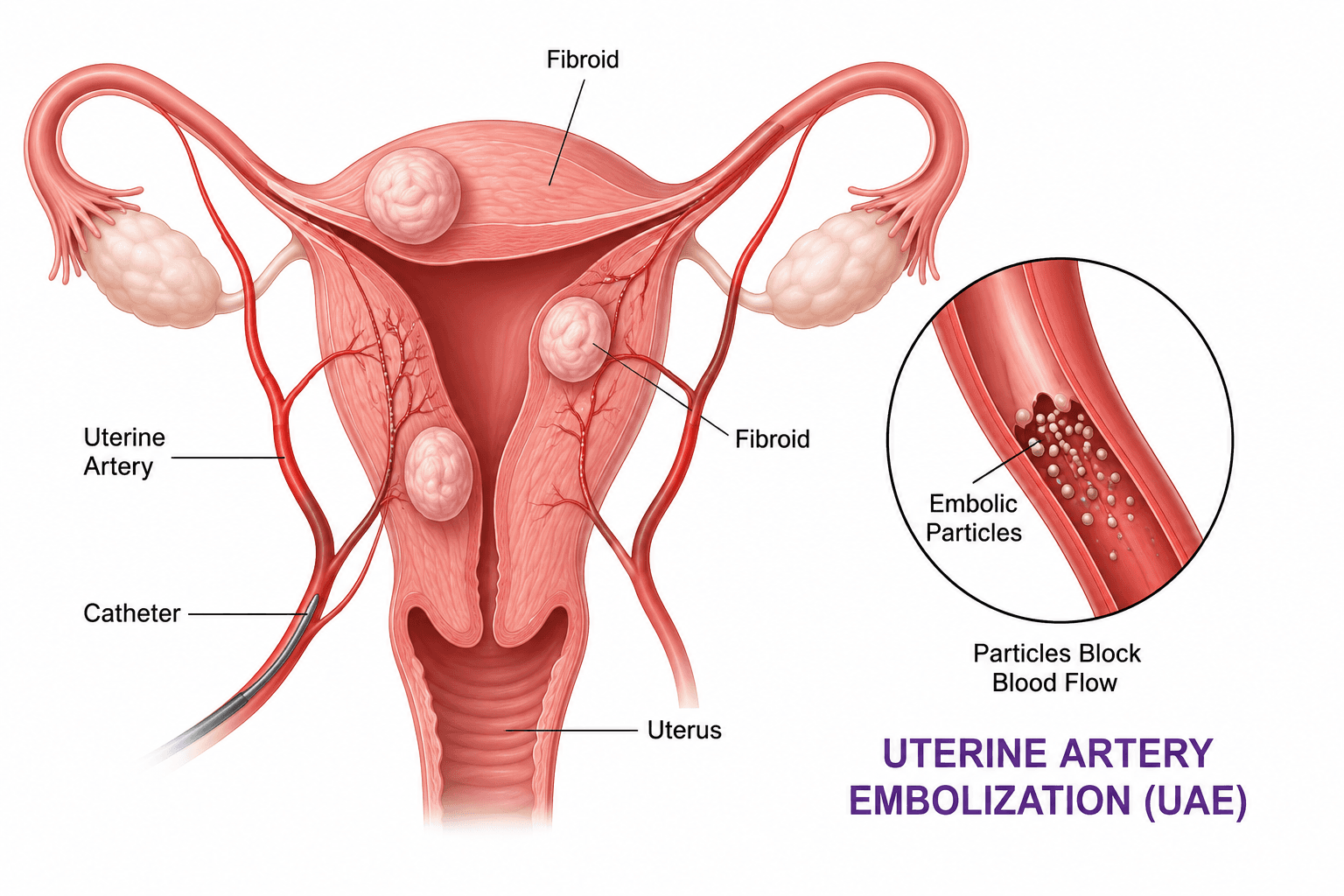
Uterine artery embolization is a safe, minimally invasive, image guided procedure used to treat both uterine fibroids and adenomyosis. During the procedure a small catheter is inserted through a tiny puncture in the wrist or the groin and guided to the uterine arteries using advanced imaging technology. Tiny embolic particles are injected to block blood flow to fibroids and adenomyosis, allowing them to shrink while preserving the uterus.
Unlike hysterectomy, UAE preserves the uterus and does not require large surgical incision.
Benefits of UAE
Comparison
| Feature | Uterine Artery Embolization (UAE) | Myomectomy | Hysterectomy |
|---|---|---|---|
| Treatment Type | Minimally invasive, image-guided procedure | Surgical removal of fibroids | Surgical removal of the uterus |
| Performed By | Interventional Radiologist | Gynecologic Surgeon | Gynecologic Surgeon |
| Anesthesia | Conscious (twilight) sedation in most patients | General anesthesia | General anesthesia |
| Incision | Tiny puncture in the wrist or groin | Abdominal, laparoscopic, or hysteroscopic incision | Abdominal, laparoscopic, or vaginal incision |
| Hospital Stay | Same-day outpatient procedure | Usually 1–2 days | Usually 1–3 days |
| Recovery Time | 5–10 days | 4–6 weeks | 6–8 weeks |
| Uterus Preserved | Yes | Yes | No |
| Treats Multiple Fibroids at Once | Yes | Depends on size, number, and location | Yes (uterus removed) |
| Blood Loss | Minimal | Moderate | Moderate to significant |
| Scarring | Minimal (tiny puncture) | Surgical scars | Surgical scars |
| Fibroid Recurrence | Treated fibroids do not regrow, although new fibroids may develop over time | New or remaining fibroids may develop | No recurrence because the uterus is removed |
| Return to Normal Activities | Approximately 1 week | 4–6 weeks | 6–8 weeks |
| Typical Patient Satisfaction | Very High | High | High |
Am I a Candidate?
Candidates typically have symptomatic fibroids or adenomyosis causing heavy bleeding, pelvic pain, pressure, urinary symptoms, constipation, or back pain. A pelvic MRI and gynecologic evaluation are completed before treatment.
Why Choose Buffalo Vascular Care?
What to expect
The procedure typically takes 60–90 minutes and is performed using conscious (twilight) sedation. Most patients go home 2–4 hours later.
Cramping, fatigue, mild nausea, and low-grade fever are common for several days. Most women return to work within 5–10 days.
Many women notice lighter periods with their first menstrual cycle after UAE. Fibroids continue shrinking over 6–12 months, leading to ongoing symptom improvement.
Complications are uncommon (<1%) but may include infection, temporary pain, nausea, or rarely hysterectomy if severe infection develops.
UAE is covered by most major insurance plans. Our office verifies benefits and obtains prior authorization.
From the Medical Director
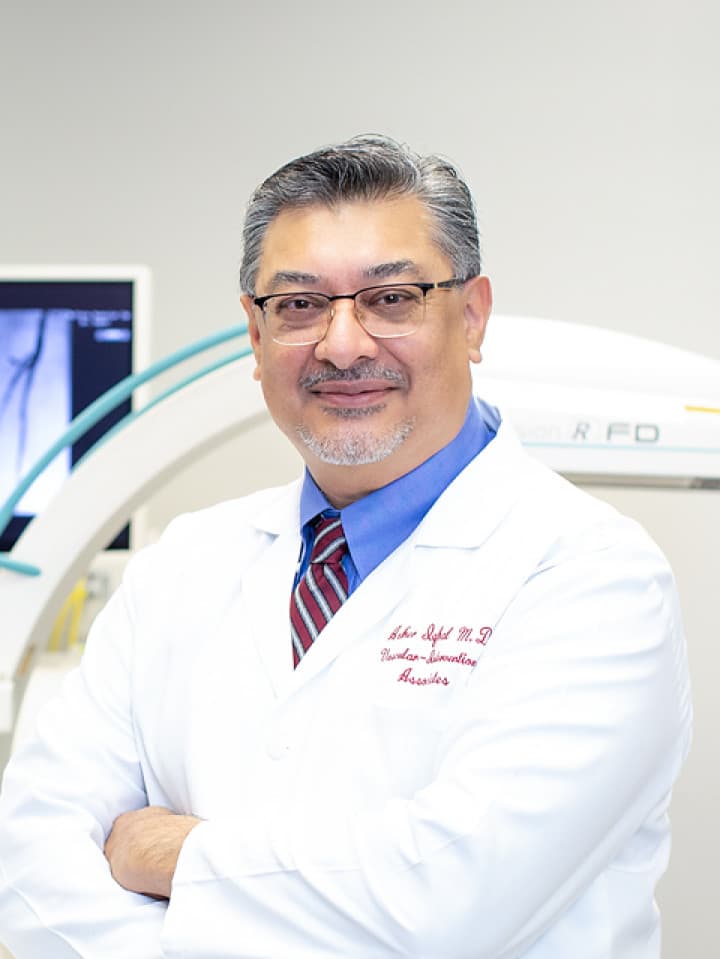
Choosing treatment for fibroids or adenomyosis is an important decision. As a board-certified Interventional Radiologist with more than 25 years of experience, I have dedicated my career to helping women avoid unnecessary surgery whenever possible. We work closely with your gynecologist throughout your evaluation, treatment, and recovery so you receive coordinated, comprehensive care. Our team is committed to compassionate, personalized care from consultation through recovery.
Common Questions
Uterine Artery Embolization is one of the most well-studied minimally invasive treatments for uterine fibroids and adenomyosis, with excellent long-term outcomes.
Clinical studies have shown:
Our goal is to provide long-lasting symptom relief while preserving the uterus and minimizing recovery time.
No. Most patients receive conscious (twilight) sedation.
No. UAE is an outpatient procedure, and most patients go home the same day.
Most women return to work in 5–10 days.
Cramping, fatigue, low-grade fever, and mild nausea are expected and improve over several days.
Many women notice progressively lighter bleeding starting with their first menstrual cycle. Fibroids continue shrinking over 6–12 months.
Only a tiny wrist or groin puncture that heals with little or no visible scar.
Cramping is expected but is managed with medications during and after the procedure.
They lose their blood supply, shrink over 6–12 months, and become scar tissue.
Yes. UAE is effective for many women with adenomyosis as well as fibroids.
During UAE, tiny medical-grade particles are injected into the arteries that supply blood to the fibroids or adenomyosis. These particles become permanently lodged within the small blood vessels feeding the treated tissue, blocking its blood supply.
The particles remain safely in place and do not travel throughout the body. Over time, the fibroids shrink and become scar tissue because they no longer receive oxygen and nutrients. The surrounding healthy uterine tissue continues to receive blood flow through other normal blood vessels.
The embolic particles have been used safely in Interventional Radiology procedures for many years and are made from biocompatible materials designed to remain in the treated blood vessels without causing harm to the rest of the body.
A consultation, MRI review, and collaboration with your gynecologist determine candidacy.
Yes. A pelvic MRI, gynecologic evaluation, and consultation are completed before treatment.
Discuss future pregnancy plans with your gynecologist and our team so treatment can be individualized.
Yes. We work closely with your gynecologist before, during, and after treatment.
UAE is performed by specially trained Interventional Radiologists.
Yes. Most women continue to have menstrual periods after UAE. The goal is to reduce heavy bleeding and improve symptoms—not to stop normal menstrual cycles. Women nearing natural menopause may experience changes in their menstrual cycle.
The procedure generally takes 60–90 minutes, with most patients going home within a few hours.
Yes. Uterine Artery Embolization (UAE) is a well-established, FDA-approved procedure and is covered by most major commercial insurance plans, as well as Medicare, for patients who meet medical necessity criteria.
Buffalo Vascular Care proudly welcomes patients from Canada seeking advanced, minimally invasive treatment for uterine fibroids and adenomyosis.
Located just minutes from the Canadian border, our accredited outpatient center provides convenient access to Uterine Artery Embolization (UAE) for women looking for a non-surgical alternative to hysterectomy or myomectomy. For more information you can reach us at manager@buffalovascularcare.com.

Request a consultation to discuss your symptoms and treatment options.
Most insurance accepted